Depth of field describes the distance between the closest and furthest objects that are in focus. Different depths of field can be achieved by adjusting the aperture on your camera, whereby the lower the f-stop number (f2.8, f4), the wider the aperture, and the narrower the depth of field. Conversely a higher f-stop (f16, f22) and so narrower aperture will generate a longer depth of field. This is well described visually below :-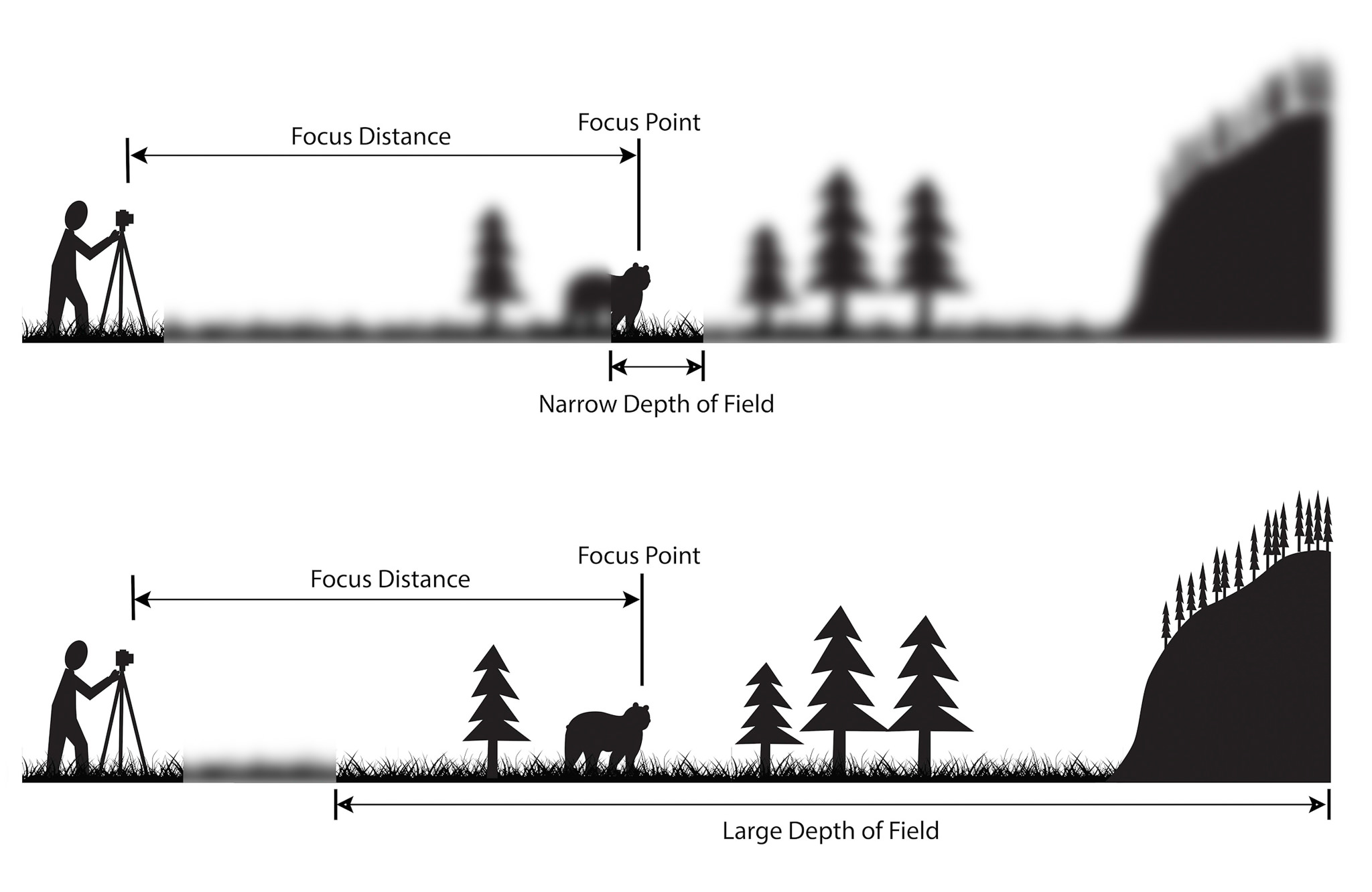
The first image shows a narrow depth of field where only the head and shoulders of the animal would be in focus with both the foreground and the background blurred. This would be achieved using a very wide aperture, as low a f-stop as possible (f2.8, f4). The second image has a very wide depth of field bringing animal , foreground and background into focus. This would be achieved by using a very small aperture, and so a high f-stop (f22 or more). These two settings create very different images of the same scene with the first very much a clear picture of the animal, whilst the second would be more of a landscape shot.
It is also worth noting that the closer the camera is to the subject the narrower the depth of field can be. The lens used is also important. It is very difficult, if not impossible, to get a narrow depth of field with a wide angle lens, which would be more appropriate for a large depth of field landscape shot, whereas the longer the lens, or focal length, combined with the greater proximity to the subject, the narrower the depth of field that can be achieved.


Both of the shots above were taken with a lens of 105mm and aperture set at f/4.0, generating a narrow depth of field whereby only the ‘st’ of ‘Australasia’ are in sharp focus and only the name and front part of the boat are in focus, whilst the back half of the boat and the background begin to blur. Although pretty much the same settings were used for both shots the depth of field on the first is much narrower than the second due to much closer proximity of the camera to the subject in the first.
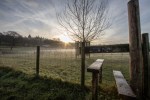
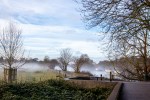
In the two shots above I tried to get a much wider depth of field using a wide angle lens and a narrower aperture f/22 and f/11 respectively. This achieved pictures that are sharp in the foreground and background.
Three depth of field shots

 UAL Level 2 -Andrew
Great shot. Good insightful comments that describe your reasoning for choosing the settings and your aims with the images. Particularly find the stag and the deer shot very well captured.
Nice the way the the geese were frozen mid-flight over the pond and the woman and dog at the left of the pond image allows the eye to flow towards the geese and out towards the right. Well captured.
The image of the two and the three cyclists in the foreground and the soft hint of city architecture in the background are also very strong.
LikeLike
Remember to address LO1 and take the opportunity to discuss your approach with any of the photographers ( or indeed any exhibition you may have taken in) that may serve as a comparison point.
Also..LO 4 … health and safety…rules to be mind
Full of when you were shooting in the glasshouses in Kew ( tripod rules!) …. around the deer in the park…public/private land(?) and how you keep camera/lenses safe and portable.
LikeLike