Shutter speed, or exposure time, refers to the amount of time that the sensor on your camera is exposed to the light of your image. Shutter speed is normally measured in fractions of a second, however very long shutter speeds can stretch into seconds and minutes. Different shutter speeds can create very different images. The faster the shutter speed the more one can freeze fast action, whilst a slower shutter speed can blur movement, both creating very different effects. Below is a brief visual description of the effect of different shutter speeds.
Depending on the focal length being used a tripod becomes necessary at speeds around 1/60, otherwise non-deliberate blur will occur.
One can adjust shutter speed directly with shutter spreed priority on the camera, or via aperture priority and ISO adjustments. This is best described in the diagram below.

Source; SLR Lounge
Working with aperture priority, the wider the aperture , the more light allowed into exposure, the faster the shutter speed. Conversely, the narrower the aperture, the less light allowed in, the slower the shutter speed. This can be offset by increasing the ISO. However, as the ISO increases , the more the quality and clarity of the final shot becomes impaired. Hence it is best to try to get the shot at ISO 100, and then acknowledge that you are comprising quality thereafter. Sometime this is necessary to get a a very fast shutter speed.
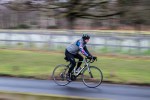


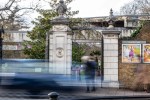
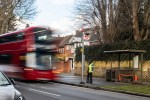

The photos above are ordered by shutter speed:-
1.This required a very fast shutter speed in order to capture a bird in flight, and in focus. In spite of having the aperture set at its widest, I still needed to increase the ISO to 500 to get the shutter speed up to 1/1250 sec.
2. was a handheld ‘panning’ shot using a shutter speed of 1/50sec. By ‘panning’, or tracking the subject, the cyclist remained in focus, whilst the blurred background emphasises the sense of motion.
3. Here I aimed at blurring the motion of the cars and people in front of the entrance at Kew. This used a 1/5 sec shutter speed and so required a tripod set on the pavement on the other side of the road, therefore requiring extra caution with both pedestrians and traffic (LO4).
4. Similar to the third in trying to capture the motion of the bus more emphatically and the more limited motion of the waiting passenger. This required a tripod again and and in spite of f/22 aperture further help was needed from a variable neutral density filter that darkened the shot a little further, and so lengthened the exposure to 1/2 sec, thus motion blurring the bus.
5. The longest of 1.6 sec, again needing the tripod and a f/22 aperture, and so creating the blurred/milky nature of the waterfall at Kew.
6. This shot required a fast shutter speed as I wanted to capture the gulls frozen in flight. In order to get this I had to have a wide aperture of f4, which thankfully did not effect the depth of field adversely as it was taken at a distance and with 70mm.
ICM (Intentional camera movement)

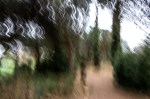



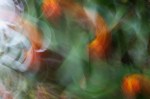
As indicated by the description these photos are taken with deliberate camera shake. A slow shutter speed is clearly required and minor movements of the handheld camera or zooming in of the lens achieves these sometimes interesting results.
Ernst Haas is a well known and rather more skilled proponent of this as can be seen below.
Source: en.wikipedia.org
Source: shutterbug.com
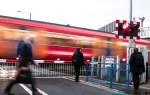
Three Shutter speed shots

 UAL Level 2 -Andrew