Unit 3 – Lighting and Studio Lighting (AC 3.1,AC 3.2, AC 4.1)
We set camera to manual with shutter speed at 1/125, F/8.0, ISO 100
1/125 is best speed to sync with flash. It is important to remember that the shutter speed also regulates how much ambient light enters the shot. This sets how much background you expose.
The intensity of the flash sets how bright the subject is. The shutter speed sets level of background exposure with 1/125 minimising background.
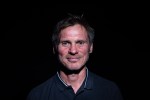
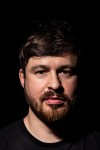
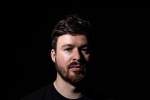
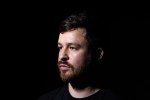
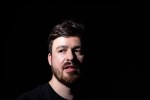
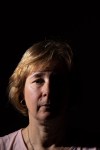
Here we experimented with flash positioning.
- Butterfly lighting – here the flash was set directly in line with the subject and a little above. This should light the face equally with small (butterfly) shadow below the nose and chin.
- Loop lighting – the flash is set at approximately 30 degree angle to the subject and a little above again. This lights the subject obviously slightly more on one side and generated a small ‘loop’ shadow of the nose.
- Rembrandt lighting – the flash was moved further round at approximately 45 degrees to the subject whereby more of the right side is shaded, generating a more dramatic portrait.
- Short lighting – the flash remained in the 45 degree angle position, but the subject moved towards it. this meant a smaller amount of the face was lit and a greater proportion in shadow.
- Long lighting – here the subject faced away from the flash allowing a greater portion of the face to be lit.
- Split lighting – this is where the flash is set at 90 degrees to the subject, hence only lighting one side, leaving the other side of the face in almost complete darkness.
It is also worth noting that this shot was taken with a white background which does not show up at all due to the angle of light. We also used a snoot on the flash focusing the light purely on the subject. This also has the effect of ‘hard’ lighting.
In order to soften the light, we need to diffuse it. We can do this using a ‘soft box’. In the following photos we used a soft box which spreads the light more widely, allowing more ambient light in the shot.
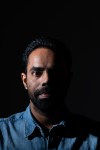
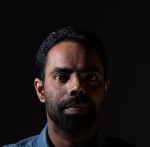
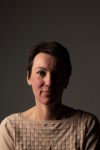
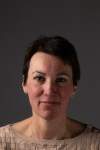


In all of the photos above we had a white background. We also used reflectors selectively to balance light and shade more subtely.
- The flash was positioned for split light and with a Snoot. Hence focused, hard light with the background black.
- Same as above, but with a gold reflector held on the right hand side of the face. I think here the reflector was a little too far away, but one can see some of the right hand side of the face slightly lit, as opposed to the heavy contrast of only split lighting.
- Now the Snoot was exchanged for a Softbox still positioned for Split lighting. One can immediately see the more diffused light is now partially reaching the white background giving a grey colour. Also the lighting of the face is softer.
- We now added a silver reflector to the above setup, and the contrasts are much less severe, lighting both sides of the face , whilst painting the Split lighting effect.
- Here we returned to Butterfly positioning of the flash with a Softbox. The head was dipped a little, hence shadows below the nose and chin and accentuation of lines.
- With the head raised the lines disappear/reduce significantly.
4.1 Safety
It is important to note that Studio photography has even greater safety risks. There is scaffolding suspended from the ceiling, with multiple pantographs attached and multiple flashes attached to them. A Pantograph allows you to lift or lower the flashes which are larger and heavier than handheld flashes. One should always remember that these flashes get very hot very quickly. They should be handled with gloves. Flashes should always be raised above head height, when not in use. It should also be noted that people are in a confined space in a studio and so extra care taken. Finally, and not least , always remember the model and their eyes. Flashes are obviously very bright, and even the modelling light will make them very warm, uncomfortably so after a while.
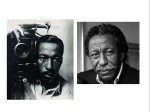
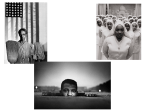
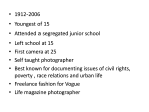
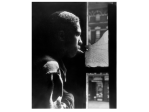
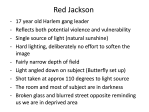
Unit 3 – Task 2 -Gordon Parks presentation (AC1.1, AC 3.2)
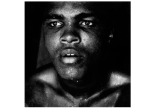
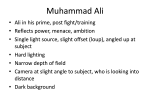
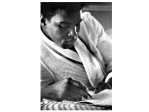
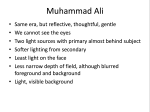
Unit 3 – Task 1 (AC4.1) and Task 3 – Portrait (AC 1.1, 2.1, 3.1, 3.2)
Task 1 – AC4.1
Clearly when setting up for a shot using studio lighting there is significant preparation, and one should always maintain good and thorough safe practise. The relevant space needs to be cleared, stool put in place and the flashes lowered into position. Once a flash is on, it is important to remember how hot they can become and how bulky and hard-edged they are. It is also important to keep the subject safe from both the bright flash and the heavy and sometimes hot equipment around them, as well as yourself.
- make a plan before shoot starts
- make sure all equipment is correctly plugged in
- keep cables to a minimum and tape them down to avoid tripping
- do not touch lamps/flashes once on – heat resistant gloves best solution
- keep area in use as people free as possible – photographer and subject only if poss
- always be aware of lowered flashes and raise them above head whenever possible
Task 3 – (AC 1.1, 2.1, 3.1, 3.2)
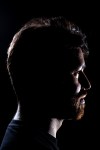
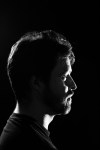
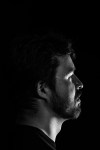
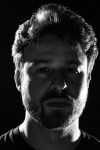
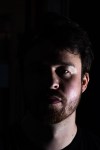
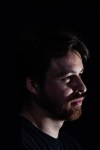
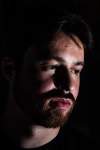
We had a dedicated studio session for this project. I wanted to use a lot of shadow and aimed for the more ‘dramatic’ shot with a dark background and hard lighting. I tried a number of angles and views, but found the side on shots most effective. Initially I set up two flashes with snoots angled from behind the subject, in order to create principally a silhouette style shot whilst also hopefully keeping the subject recognisable as well as getting catch lights in the eyes or eye where possible. This was effectively ‘clam’ lighting’ set up behind the subject. In the third shot the left hand back light was turned off and I experimented with a silver reflector and then a fill light set at a weaker strength as I wanted the main source of light to be mainly on the unseen side of the face. This was the most effective I felt as the main light is clearly on the other side of the face, but the weaker fill light allowed us to see the definition of viewed side of the face. I also experimented with the subject looking at the camera and obliquely away. The camera was set on manual using 1/125, f8.0 and ISO 100. I started with the flash power on 1, then 2 and finally 3, and assessed the results. Given most light was coming from behind the subject, the more powerful setting achieved the best results. In post shot editing I also experimented with black and white for further effect.
Unit 3 – Task 3 – Still life AC(1.1, 2.1, 3.1, 3.2)
Task 3 – Still Life AC(1.1, 2.1, 3.1, 3.2)
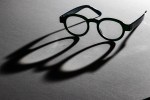
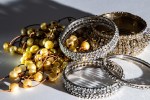
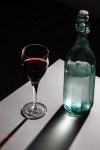
I wanted to experiment with shadow and reflection in the still life. Initially I simply used the shadow cast by a pair of spectacles with flash set up obliquely behind them and tried to create some drama with the much larger shadow. This required trying shots from all around the spectacles, and keeping the flash fairly low relative to the glasses. I also needed to reduce the power of the flash as initially it created a rather washed out effect. I then moved to jewellery, trying flash from one side and a strong torch from the other, allowing both sides of the shot to be lit whilst having shadow behind, with the right side clearly more powerfully lit by the flash than the left with the torch. I also experimented with a glass of wine and chilled bottle of water to see what sort of effects could be achieved with the dew on the bottle and the long shadows. All of these shots were taken in manual with shutter speed set at 1/125 and using a flash with various power settings. Mostly I found the flash needed to be powered down.
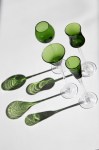
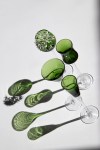
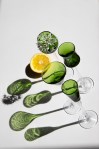
I also tried one shot of a drop of wine into the glass of wine. This required a very high ISO to achieve the necessary fast shutter speed. I finally settled on wine glasses and liquor glasses. The green coloured glasses were particularly effective at casting a long and interesting shadow. I experimented here with both flash and sunlight. The green glasses on the board created the best effect with the strong sunlight through the kitchen window. Here again I experimented with both flash and natural sunlight. The sunlight achieved the best results on this particular occasion thanks to being a particularly bright day. The white board is virtually ‘bleached’ to highlight the texture of the green glasses and the interesting shadow they cast.
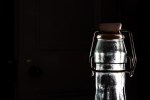

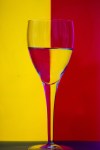
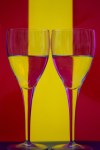
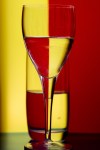
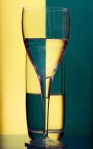
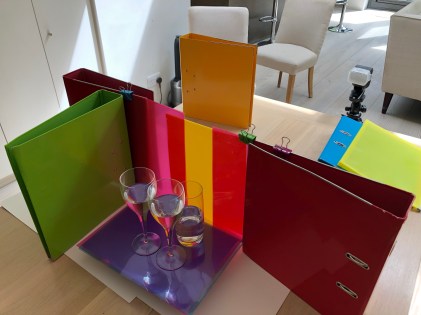
Finally I experimented with the reflection of light and colour through glasses partially filled with water, creating the mirroring effect of the colours. This was set up with coloured plastic letter files held up by bulldog clips attached to lever arch files to the side. Again I found the images with coloured backgrounds were difficult with a flash as it was difficult to achieve without some of the flash itself in the shot as the light needed to be coming through the coloured plastic folders. Once again the broader stronger but defused sunlight from outside was the most effective on this occasion. I also sometimes had to increase the ISO given the light conditions trying to use sunlight indoors. The base was also darker coloured plastic which reflected shadow upwards slightly darkening the side of the glasses given an improved effect. Overall, whilst pleased with the results I think they could be improved in a studio with a white background behind being bright lit, replicating the sunshine.
End of Unit 3
 UAL Level 2 -Andrew